Best AI Practice Test Generator Tools for Students


An AI practice test generator can turn your lecture slides, course PDFs, or notes into questions you can use right away. The best fit depends on your materials and how you want to review. Here are five options, starting with StudyBuddy, for building practice around your own course content.
1. StudyBuddy
StudyBuddy is a web and iPhone study app that turns your course materials into multiple-choice questions, flashcards, and answer explanations. Upload a PDF, slides, notes, a photo, or a YouTube video, then use the generated practice to test what you remember.
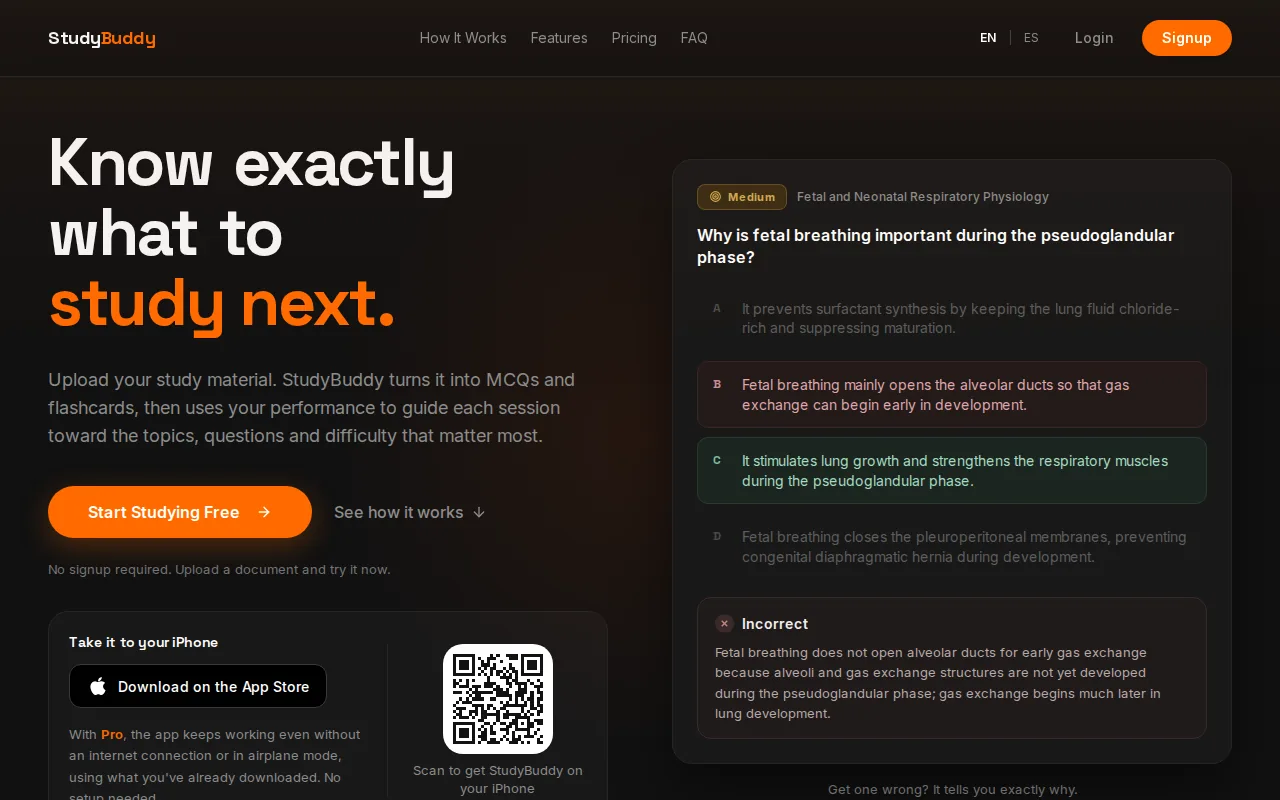
It’s a strong fit for university students and exam candidates who already have course material but don’t have time to write questions by hand. A law student can turn contract notes into MCQs. Someone studying accounting can use lecture slides to review key rules. The app adapts practice to your performance and tracks topic mastery and exam readiness, helping you decide what to review next. Those measures guide your study choices; they don’t promise an exam result.
StudyBuddy is available in English and Spanish, and it’s free to try. Pro costs $8.99 per month or $89.90 per year. The free plan has monthly processing credits, and existing documents remain available to study if you reach the limit for processing new ones. For the full workflow, see the AI quiz generator for notes and PDFs.
Choose StudyBuddy when you want practice drawn from your own files, then want the app to help point you toward weaker topics. Upload once and switch between question practice and flashcards as your study task changes.
2. Knowt: Free practice with adaptive review
Knowt is a study tool with AI-generated practice tests, spaced repetition, and an adaptive Learn Mode. Its free tier includes unlimited AI-generated practice tests, which makes it worth considering if you want to test yourself often without paying for that feature.
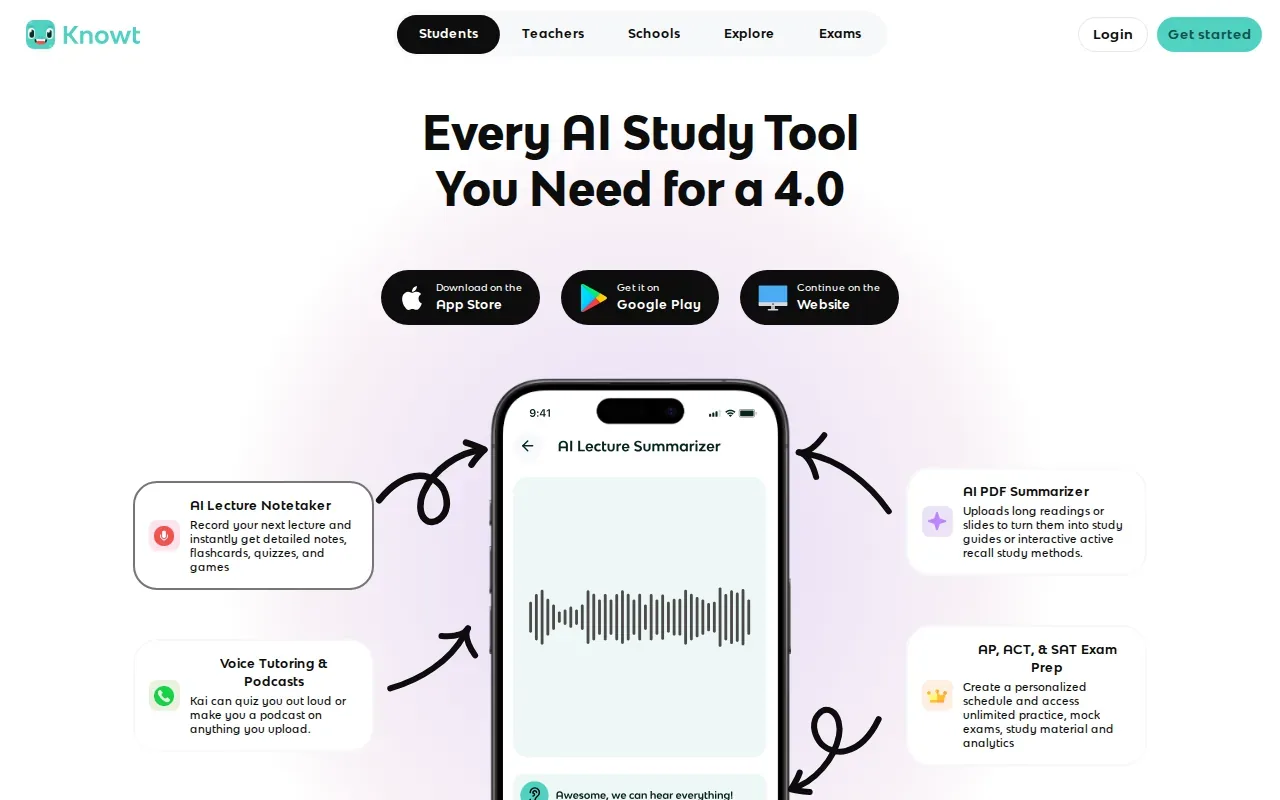
Knowt suits students who like to move between test questions and repeated review. A practice test lets you check what you can recall now. Spaced repetition brings material back over time, while Learn Mode adapts review based on your answers. That mix can help when you’re working through a large set of terms or concepts across several study sessions.
Knowt also integrates with Quizlet, which may help if you already use Quizlet study sets. The value depends on what you want to do with those materials: repeated practice and adaptive review are central reasons to consider Knowt, while your own course PDFs and slides may call for a tool centered on generating practice from uploaded sources.
For a course in statistics, for example, you might use repeated review to recall definitions before working through a practice test. Keep the source material close by when you check a question you missed. That makes it easier to spot whether the gap is a forgotten term or a larger idea you need to revisit.
Knowt stands out for the amount of practice available on its free tier. It’s a sensible pick when unlimited generated tests and adaptive review matter most to you.
3. StudyFetch: Practice in standardized exam formats
StudyFetch generates practice tests designed to mimic standardized exam formats, including AP-style questions and formats for exams such as NCLEX and USMLE. It’s a useful fit when you need more than general subject questions and want practice shaped around a specific test format.
That focus can matter when the exam asks you to apply knowledge in a particular way. StudyFetch describes format-specific questions for medical and nursing boards, law, finance, and AP exams. Its practice-test page also describes timed sessions and result breakdowns. Those details make it a candidate for students preparing for a set exam structure, rather than someone looking only for quick recall questions.
For example, an AP student may want to practice in an AP-style format, while a licensing candidate may need questions that reflect the exam’s structure. StudyFetch’s exam-specific approach is designed for those cases. Its starting price is around $8 per month.
StudyFetch has a broader set of study features as well. That wider scope may suit you if you want several study functions in one place. If you only need to turn your own course notes into straightforward practice, compare that broader approach with a focused document-to-questions workflow before deciding.
Pick StudyFetch when matching your practice to a named standardized exam is the main need. Check that the exam format you’re preparing for is one of the formats it supports.
4. ChatGPT by OpenAI: Flexible question creation from notes
ChatGPT by OpenAI can create a practice test from a prompt or pasted notes. It’s a flexible choice if you want a back-and-forth study session and need to ask for a change in difficulty.
Give it a section of your notes, then ask for questions that test the main ideas. You can request easier or harder questions in a follow-up prompt. For a history course, you might ask for questions about cause and effect. For statistics, you could ask for conceptual questions that check when to use a method, rather than only asking for definitions.
Turn your notes into a practice exam
Upload a document and StudyBuddy builds questions, flashcards and explanations in minutes.
Try it freeThis conversational setup gives you room to refine a question set as you go. If a question feels too easy, ask for a harder version. If you miss a concept, ask for an explanation or another question on the same idea. The process can feel more like talking through a topic than taking a fixed quiz.
But generated questions and answers still need a quick check against your course material. Compare any unclear answer with the relevant lecture slide or assigned reading before you rely on it. ChatGPT is also different from a study app built around tracking topic mastery: its strength here is flexible question creation and difficulty adjustment through prompts.
If you already have notes in text form and want to shape the questions through conversation, ChatGPT can work well. For another look at how dedicated tools turn course files into questions, compare the options in this student practice question generator roundup.
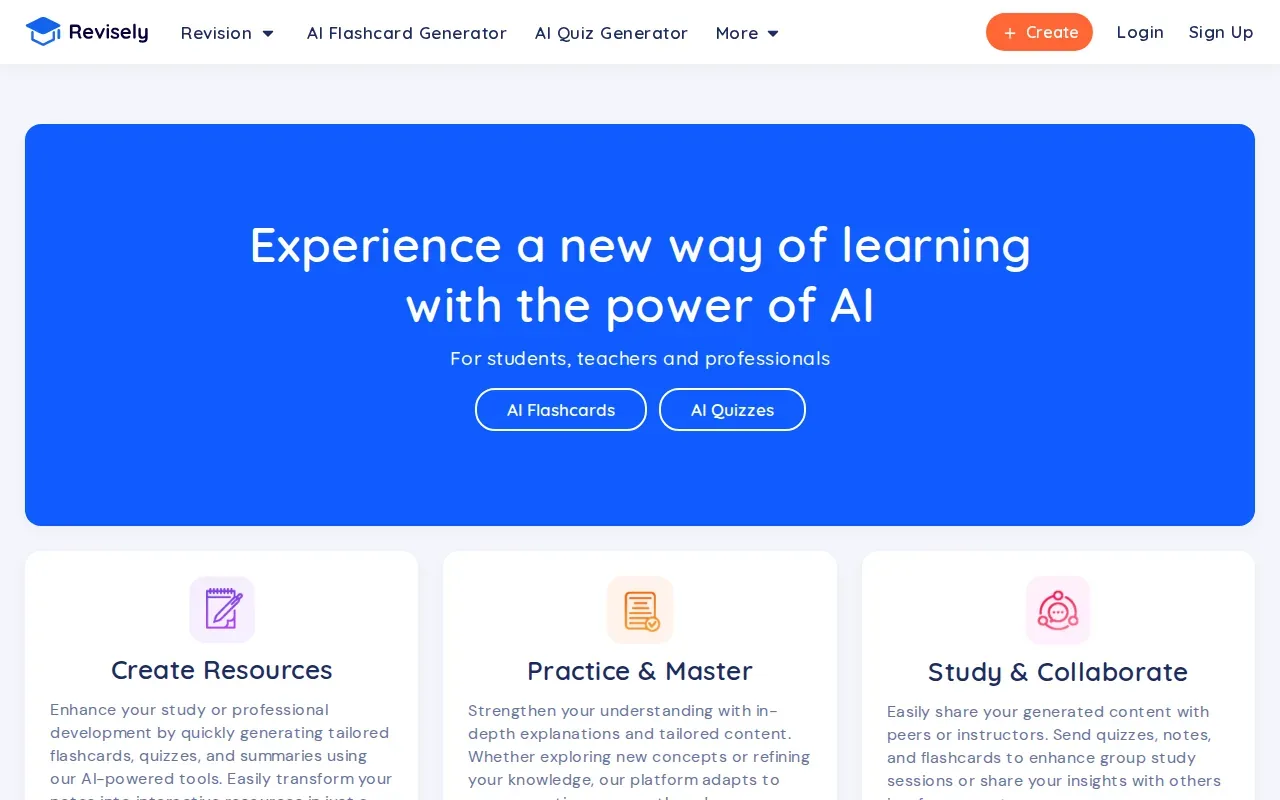
5. Revisely: Multiple question types from notes, PDFs, and slides
Revisely turns notes, PDFs, and slides into multiple-choice, true-or-false, and short-answer quizzes. It’s aimed at students who want more than one question style from their existing study material.
That range gives you different ways to check recall. Multiple-choice questions ask you to choose between answers. True-or-false questions make you judge a statement. Short-answer questions require you to bring the answer to mind without seeing options. You can use the formats to check the same topic in different ways, such as testing a history term first with a choice and then with a short response.
Revisely is also geared toward UK curricula, including GCSE and A-Level practice. That focus may fit students following those programs. U.S. students can still consider the tool for general revision, but should check that the generated questions match their course goals and the way their own exams are written.
Review the generated set before relying on it, especially if a slide uses a chart, a field-specific term, or a detail your instructor stresses. The PDF-to-flashcards study workflow is another option when you want both recall cards and quiz practice from one document.
Choose Revisely if the question formats suit your revision style, or if GCSE and A-Level alignment is relevant to your studies. For U.S. courses, compare each quiz with your syllabus before making it your main practice source.
Compare the AI practice test generators at a glance
Use this quick comparison to narrow the list by the kind of practice you need. The key difference is the study job each tool supports, not a claim that one set of questions will fit every class.
| Tool | Best fit | Materials or exam focus | Standout study feature |
|---|---|---|---|
| StudyBuddy | Students studying from their own course files | PDFs, slides, notes, photos, and YouTube videos | Adapts practice to performance and tracks topic mastery |
| Knowt | Frequent practice on a free tier | AI-generated tests and study sets | Unlimited tests with adaptive Learn Mode and spaced repetition |
| StudyFetch | Standardized and licensing exam candidates | Exam formats such as AP, NCLEX, and USMLE | Practice tests built to mimic specific exam formats |
| ChatGPT by OpenAI | Students who want a flexible chat-based study session | Prompts or pasted notes | Adjusts question difficulty through prompts |
| Revisely | Students who want several quiz formats | Notes, PDFs, slides, with a UK curriculum focus | Multiple-choice, true-or-false, and short-answer questions |
StudyBuddy’s category research found adaptive learning in 20 of 41 tools reviewed. If you want the system to respond to how you perform, that’s a feature to check rather than assume. StudyBuddy combines adaptive practice with several input types, while the other picks have distinct strengths around free practice, exam formats, conversational prompts, or question types.
For most students starting with lecture slides or a course PDF, begin with the tool that can use that material directly. Then check how it handles feedback, difficulty, and the topics you miss.
FAQ
Can AI make a practice test from a PDF?
Yes, some AI study tools can turn a PDF into practice questions. StudyBuddy accepts course PDFs and generates multiple-choice questions, flashcards, and answer explanations from uploaded material. Revisely also supports PDFs and creates several quiz formats. Check the generated questions against your source, especially when the PDF includes complex diagrams or subject-specific details.
Can I make a quiz from lecture slides?
Yes, tools that accept slide decks can turn lecture content into quiz questions. StudyBuddy supports slides, and Revisely’s quiz generator accepts slide materials. Start with one lecture or topic so you can check whether the questions reflect the ideas your instructor emphasized. A clear, focused source makes the quiz easier to review.
Which AI practice test tool has adaptive review?
StudyBuddy and Knowt both include adaptive study features. StudyBuddy adapts practice to your performance and tracks topic mastery and exam readiness. Knowt has an adaptive Learn Mode and spaced repetition on its free tier. Choose based on whether you want practice generated from your own course materials or repeated review through Knowt’s study features.
Are AI-generated practice questions always correct?
No, you should check AI-generated questions and answers against your course material. A tool can produce a question that misses context or treats a specific term in a way your class doesn’t. Review any item that seems off, then use your lecture slides, assigned reading, or official study guide as the final reference.
Can I choose the difficulty of AI-generated questions?
Some tools let you shape difficulty, though the method varies. ChatGPT by OpenAI can adjust question difficulty when you ask in a prompt. StudyBuddy adapts practice to your performance. For other tools, check the controls available in the quiz flow, then review a few questions to see whether the level fits your exam preparation.
Conclusion
If you’re studying from your own PDFs, slides, notes, or videos, StudyBuddy is a clear place to start because it turns those materials into MCQs, flashcards, and explanations, then adapts practice to your performance. Try it with one course document and use the topic tracking to decide what to review next.
Turn your notes into a practice exam
Upload a document and StudyBuddy builds questions, flashcards and explanations in minutes.
Try it freeRelated articles
-
How to Do Spaced Repetition: A Step-by-Step Guide
Studying the same material for hours can feel productive, then leave you unsure what you can recall. Learning how to do spaced repetition gives each topic another chance to stick: review it after a...
-
Accounting Practice Questions and Study Resources
Accounting problems can feel tricky when you’re not sure which rule to use. These accounting practice questions cover core topics, show how to work through sample answers, and point you to ways to...
-
How to Study for a Final Exam: 5 Steps That Work
If you’re figuring out how to study for a final exam, a pile of slides and notes can make it hard to know where to begin. Start with the topics your instructor is likely to test, then spend most of...