How to Study for a Final Exam: 5 Steps That Work

If you’re figuring out how to study for a final exam, a pile of slides and notes can make it hard to know where to begin. Start with the topics your instructor is likely to test, then spend most of your study time recalling answers and fixing gaps. These five steps will help you turn course materials into a plan you can follow.
An analysis of 44 comments and questions from YouTube, Quora and Reddit about studying for final exams found that 16% mentioned creating a study schedule.
Step 1: Map the Exam Scope and Make a Realistic Study Plan
Goal: Know what the final covers and decide what to study first. Start as soon as you know your exam date, ideally weeks ahead rather than during finals week.
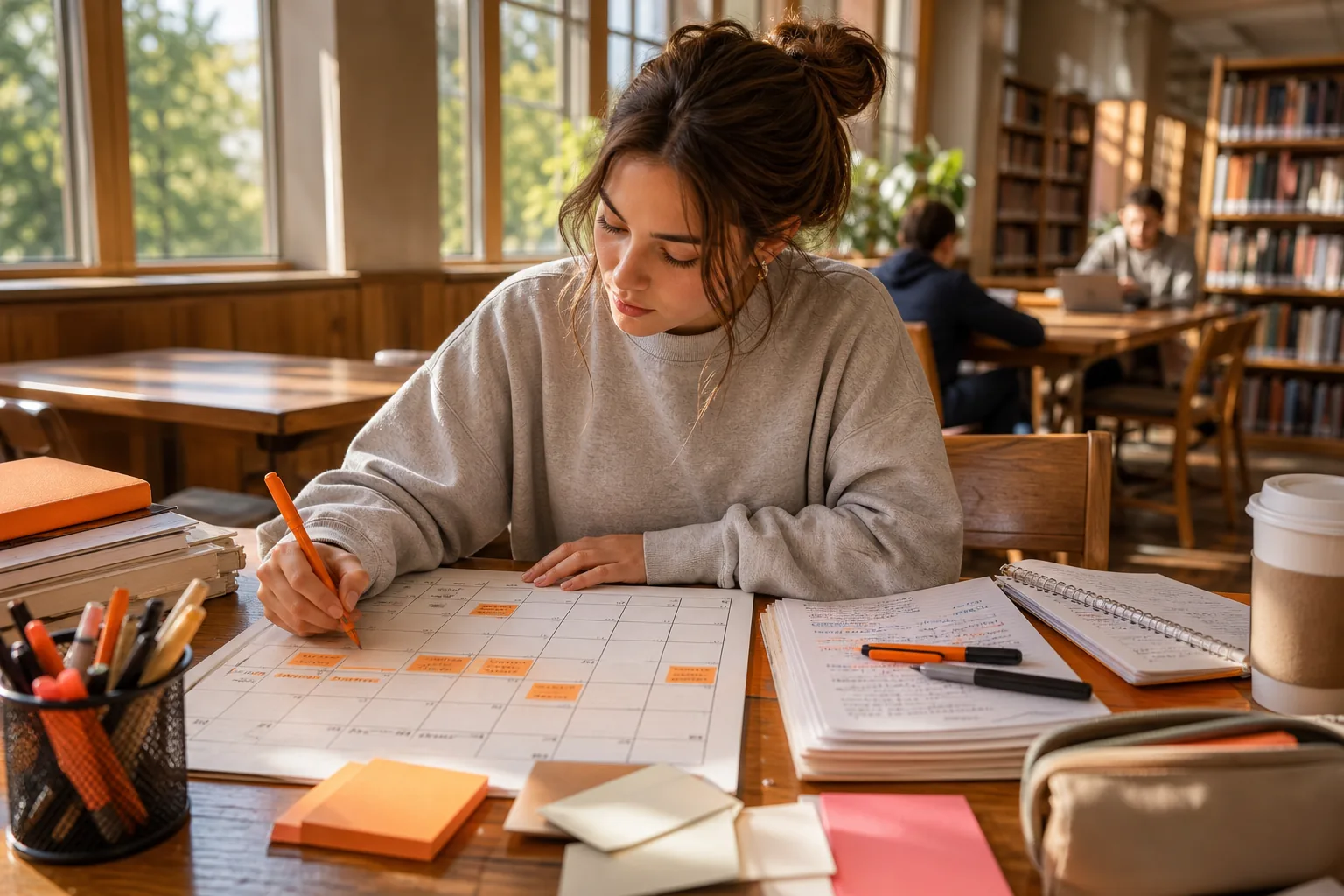
Write each exam date on a calendar. For each course, check the syllabus, lecture slides, review guide, quizzes, and past exams if your instructor has shared them. Make a topic list from those sources. Topics that came up in lectures, assignments, or earlier tests deserve a close look.
Rate each topic from 1 to 3. Use 1 for a topic you can’t explain yet, 2 for one you partly understand, and 3 for one you can explain or use without notes. Start with the 1s. It’s tempting to begin with an easy topic because it feels good to get through it. But that can leave the hardest material for the last night.
Now turn the list into study sessions. Give each session a topic and a task, such as “review contract elements, then answer 10 questions.” Leave space for meals, sleep, and breaks. If you have several finals close together, rotate courses across the week instead of giving one class every available hour.
Use course materials to identify likely exam topics and rank them by how much review they need. Try writing a course outline from memory before you check your notes. The blanks show where your plan needs more time.
By now you should have a topic list, a priority rating for each item, and a calendar with study blocks before each final.
Step 2: Organize Your Slides, PDFs, Notes, and Past Exams
Goal: Make it easy to find the exact material you need for each topic. Gather course files before you start making summaries or practice questions.
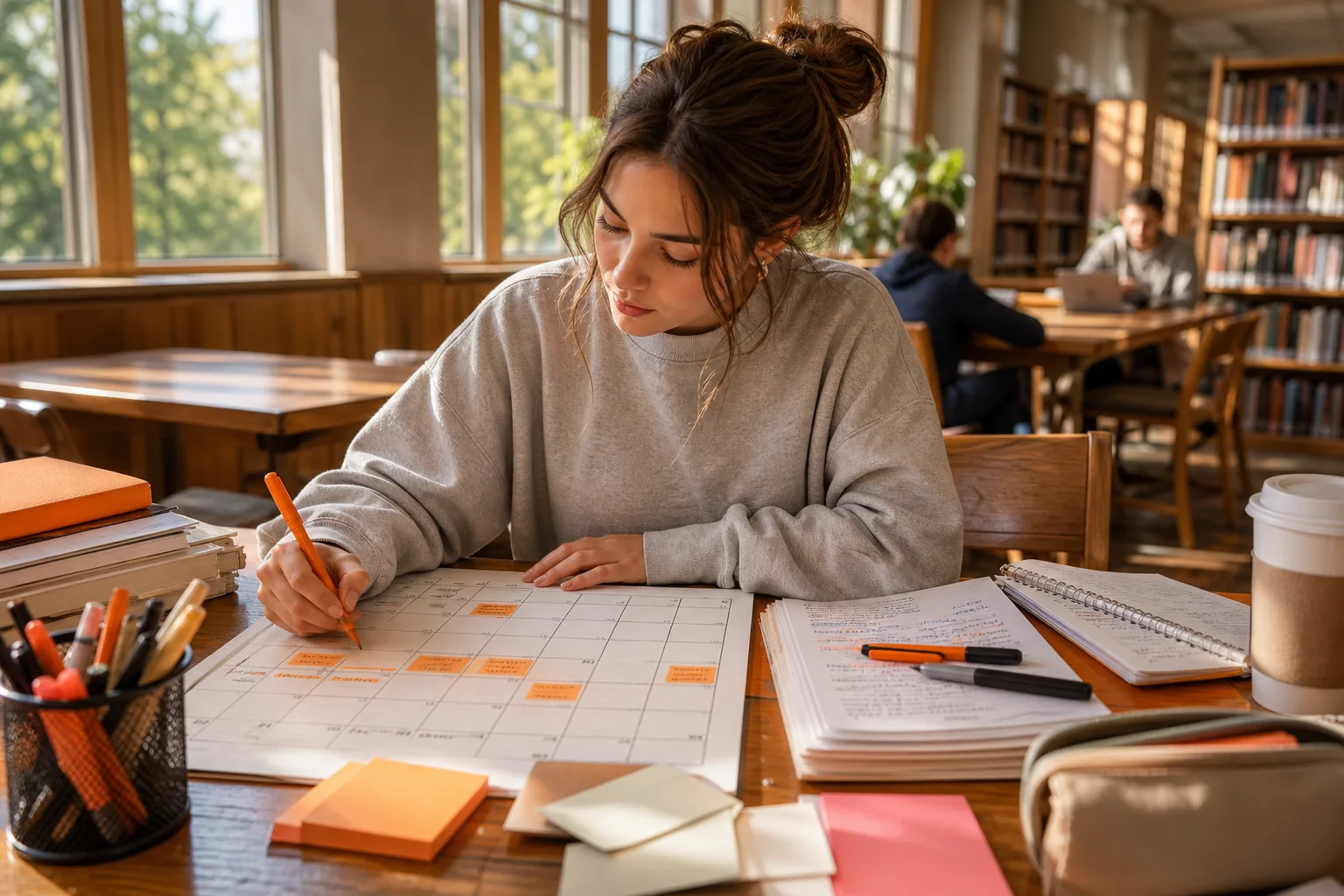
Create one folder or digital workspace for each course. Group files by topic or unit, rather than only by the date you received them. If your instructor returned quizzes or shared past exams, keep those near the matching unit. A question you missed on an early quiz may point to a skill that still needs work.
Give files names you can scan quickly, such as “Statistics: confidence intervals” or “History: Reconstruction.” Keep required course materials apart from optional readings. That way, when time gets tight, you can start with the slides, readings, and review guide tied to the final.
Use the syllabus to check your coverage. If the course lists six units, make sure your folder or notes have material for all six. Don’t spend an hour polishing a perfect set of notes before you’ve tested whether you can recall the main ideas. Organizing should help you study, not become another task that takes over the day.
If you’re turning your own notes into cards, keep each prompt focused on one idea. A question about a definition should not also ask for three examples and an exception. The guide to making effective flashcards explains how to build prompts that are easier to answer from memory.
StudyBuddy can cut down on manual prep. Upload your course PDFs, slides, notes, photos, or a YouTube video, and the app turns that material into multiple-choice questions, flashcards, and answer explanations. Check the generated items against your original notes, especially for a formula, date, or term that your instructor uses in a specific way.
By now you should have a course folder that matches the exam topics, with the most useful files easy to find.
Step 3: Test Yourself With Active Recall, Not Just Rereading
Goal: Find out what you can produce without looking at the answer. Close your notes, then try to explain a topic, solve a problem, or answer a question from memory.
Rereading can make a page feel familiar without showing whether you can recall it later. Instead, read a short section, hide it, and write down what you remember. Then check the source. Circle a missing step or a detail you mixed up, and try to state the idea again in your own words.
Use the kind of practice your final requires. For a statistics exam, work a problem without checking the solution first. For a history course, explain why an event happened and what followed. For a language final, try recalling a word or grammar rule before looking at the answer. You can also explain a concept out loud as if you were teaching it to a classmate. If your explanation stalls, you’ve found a topic to revisit.
Self-testing with practice questions or flashcards can help you check what you know, while rereading alone may create a false sense of knowing. Take breaks during study sessions; a starting pattern is 25 minutes of focused study followed by a five-minute break. The University of Cincinnati also shares finals study advice.
Turn your notes into a practice exam
Upload a document and StudyBuddy builds questions, flashcards and explanations in minutes.
Try it freePut your phone out of reach and close tabs you don’t need. Don’t switch between messages and a practice set; each switch breaks the time you set aside to retrieve answers. If studying alone feels stuck, ask a classmate to quiz you or take turns explaining one hard topic. Use the group to find gaps, then test yourself alone so you know you can recall the answer without a hint.
StudyBuddy turns your uploaded course materials into MCQs, flashcards, and answer explanations, then adapts practice to your performance. It tracks topic mastery and exam readiness. Treat those signals as a way to choose what to review next, not as a promise of a grade. For more ways to use retrieval practice, see how to do active recall.

By now you should have a list of answers you can recall and a short set of gaps to fix.
Step 4: Space Out Reviews and Rotate Between Topics
Goal: Revisit key material on separate days so you have to retrieve it again, rather than repeating one topic in a single long session.
When you finish a topic today, put it back on your schedule for a later review. Try a short check the next day, then return to it again after more time has passed. If you miss the same idea, keep it on your weak-topic list and schedule another attempt. If you answer it clearly, give it less time next round.
Spaced review works best when you test yourself during each return. Don’t just reread the same pages. Try a few flashcards, solve a fresh problem, or explain the idea without notes.
Rotate between related but distinct topics once you know the basics. For example, switch between probability questions and sampling questions, or compare two similar legal doctrines. This helps you practice choosing the right method, not only repeating the same kind of question. Keep a short note of the cue that tells you which idea or method fits.
Visual tools can help when a topic has links between ideas. Sketch a mind map for causes and effects in history, or draw how a process moves through stages in biology. For a list of terms, chunk related items into a few groups and test each group. A mnemonic can help with a fixed sequence, but it won’t replace practice explaining what each part means.
Use focused blocks that fit your attention. A timed interval such as 25 or 50 minutes can give a session a clear start and stop. Take a short break, stretch, get water, or walk outside before the next block. If a colorful tracker or small reward helps you return tomorrow, use it to support the schedule, not to turn each session into a race.
By now you should have a review calendar that brings weak topics back more often and mixes in stronger topics over time.
Step 5: Take a Timed Practice Test and Plan Your Final Review
Goal: Practice the exam format under a time limit, then use your errors to set the last few review tasks.
Use a past exam, instructor review questions, or a fresh practice set that matches the final. Set a timer based on the exam instructions. Put your notes away, avoid checking answers mid-test, and work in the format you’ll face. If the final has short answers, practice writing them. If it has multiple choice, practice reading every option before choosing.
After you finish, review each missed or uncertain answer. Label the cause: you forgot a fact, confused two ideas, misread the prompt, or made a process error. Then return to the matching lecture slide or course reading. Write one corrected explanation in your own words, and try a new question on the same topic later.
Keep your last review narrow. Revisit the error list, key terms, formulas, or dates that still need work. Don’t start a large new set of material the night before unless your instructor has pointed you to it. A final quick recall check is more useful than racing through every page again.
For multiple-choice finals, careful practice can show whether you know the content and whether you’re misreading answer choices. Read each prompt fully, rule out choices you know are wrong, and note why each missed answer was wrong.
StudyBuddy can generate MCQs and explanations from your own course files, then adapt later practice to your performance. Use the topic mastery and Readiness Score as cues for where to spend your remaining time. They can help you decide what to review; they can’t guarantee how an exam will go.
Protect the basics, too. Eat a regular meal, drink water, and keep your usual sleep routine rather than pulling an all-nighter or making a sudden change to your caffeine intake. If anxiety spikes, pause for a few slow breaths and return to one question at a time. You’ve already done the work of finding what needs attention.
By now you should have a timed practice result, a short error list, and a final review plan that fits the time you have left.
FAQ
How many days should I study before a final exam?
Start as soon as you know the exam date, and aim to spread review across the weeks before it when your schedule allows. If you have less time, list the exam topics today and begin with the ones you can’t yet explain. Several shorter sessions on separate days give you more chances to recall material than one long cram session.
Is it better to reread notes or take practice questions?
Practice questions are a stronger main method because they make you retrieve an answer instead of only recognizing words on a page. Use your notes to check and fix a missed answer, then close them and try again. Rereading can help you learn a new concept, but don’t let it replace testing yourself.
How long should a study session be?
Choose a focused block you can repeat without losing attention. One starting option is 25 minutes of study followed by a five-minute break, or 50 minutes followed by a 10-minute break. Adjust the length to the task. A hard problem set may need a different pace than a short flashcard review.
What should I do the night before a final?
Review your short list of weak topics, key terms, or formulas, then stop in time to keep your normal sleep routine. Avoid trying to relearn the whole course overnight. Pack what you need and plan when you’ll leave, so exam morning doesn’t add a new rush.
Conclusion
Start with the exam scope, then use short sessions to recall and repair what you don’t know yet. If you have course files ready, try one practice set in StudyBuddy and use the results to choose your next review topic.
Turn your notes into a practice exam
Upload a document and StudyBuddy builds questions, flashcards and explanations in minutes.
Try it freeRelated articles
-
How to Do Spaced Repetition: A Step-by-Step Guide
Studying the same material for hours can feel productive, then leave you unsure what you can recall. Learning how to do spaced repetition gives each topic another chance to stick: review it after a...
-
Accounting Practice Questions and Study Resources
Accounting problems can feel tricky when you’re not sure which rule to use. These accounting practice questions cover core topics, show how to work through sample answers, and point you to ways to...
-
Best Personalized Learning Apps for Students
A personalized learning app can make your course materials easier to study, but the apps don't all adapt in the same way. Some build practice from your files; others guide you through set lessons...