How to Study With Flashcards: 8 Simple Steps


Flashcards work best when you try to recall the answer before you turn the card. A few small changes can make your review more useful and help you spot weak topics. Start with one course unit, then use these steps to build a steady routine from your own material.
Step 1: Start With One Course Unit
Pick a single lecture, chapter, or exam topic. Gather its slides, course PDF, class notes, or official study guide. Starting with one unit makes it easier to check that each card fits your class and doesn’t mix in unrelated facts.
If typing every card by hand feels like a chore, StudyBuddy can turn uploaded course material into flashcards, MCQs, and answer explanations. Its PDF-to-flashcards tool is one way to begin with your own course content instead of a broad, pre-made deck.
Check generated cards against your assigned material, especially when a formula, date, or exception matters. Treat them as a first draft, not a substitute for your instructor’s source.

Step 2: Write One Clear Idea Per Card
Give each card one job. A card with several unrelated facts is hard to answer honestly, since you might know part of it but miss the rest.
Turn a course point into a direct question. For accounting, ask, “When is revenue recorded under this rule?” For history, ask, “What event began this period?” Keep the answer short enough to check at a glance.
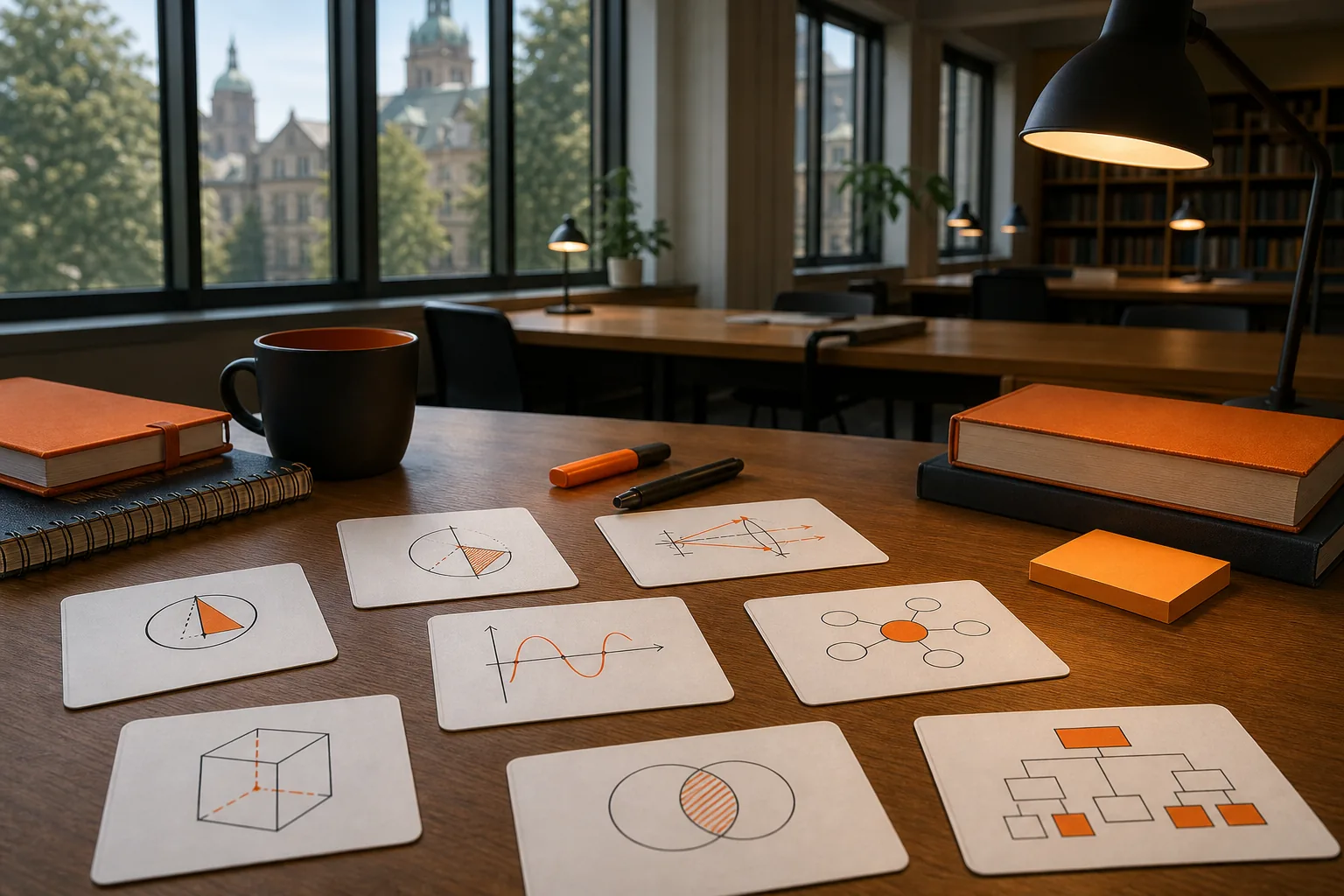
For a long process or a broad theory, split the topic into smaller cards. Use a picture when a diagram carries meaning, such as a labeled circuit or map. Color can mark subjects or chapters, but it shouldn’t replace a clear prompt.
Step 3: Recall Before You Flip
Read the prompt, then try to produce the answer before looking. That effort is active recall. Merely seeing the answer and thinking “I knew that” is recognition, not a test of what you can bring to mind.
Say your answer out loud when you can. In a quiet library, whisper or form a full answer silently, then commit before flipping. Be strict with yourself: if you missed a key detail, mark the card as missed or almost right.
Retrieval practice means testing what you can recall rather than relying only on review.
Step 4: Test Both Sides
Once you can answer one direction, switch the prompt. If one side shows a term, try to give its meaning. Then read the meaning and recall the term. This helps reveal whether you can retrieve the link in both directions.
Keep both prompts clear. For contract law, one card might ask for the meaning of a key term. Its reverse can ask you to name the term from a short definition. If the reverse becomes vague, add enough context to make the answer clear.
When you’re making cards from notes or slides, a guide to making effective flashcards can help you turn one course idea into a focused prompt.
Step 5: Sort Cards by How Well You Answered
After each answer, compare it with the card. Mark it correct only if you gave the key idea without a hint. Put partly correct answers in a separate group so you can review them soon.
Turn your notes into a practice exam
Upload a document and StudyBuddy builds questions, flashcards and explanations in minutes.
Try it freeShuffle the deck before another round. A fixed order can let the last card cue the next answer, which makes recall seem stronger than it is. Spend more time on missed cards, but bring the full set back later.
For example, if you recall a statistics formula but forget what one symbol means, keep that card in the review group. The small gap is useful information. It tells you what to fix next.
Step 6: Space Out Your Review
Don’t try to finish every card in one long sitting. Review a set, take a brief break, then return to missed cards. Come back to the full set on a later day so you must retrieve the information again.
Spaced repetition systems schedule cards for later review based on your answers. In StudyBuddy, Adaptive Study adjusts practice to your performance, while topic mastery and the Readiness Score help you decide what deserves more review. They’re study aids, not promises about exam results.
One study of medical students looked at how spaced-repetition flashcard review with Anki related to their academic performance. Whatever tool you use, check difficult facts against your official course material.
Step 7: Add Application Cards
Basic cards are useful for terms, definitions, dates, and short facts. To prepare for questions that ask you to use an idea, write a prompt with a small scenario or a course-style question.
For accounting, ask which entry fits a given transaction. For engineering, ask which formula applies to a stated set of conditions. Keep the answer brief, then use a past paper or a longer written response to practice the full reasoning.
StudyBuddy can make MCQs and answer explanations from your uploaded slides or PDFs, then adapt later practice to your performance. Its quizzes give you another format for checking whether you can use a concept beyond its flashcard definition.
Step 8: Keep Sessions Short and Repeatable
Set a timer for about 20 minutes, then take a short break. If your focus drops sooner, stop and return later. A tired run of guesses won’t show you clearly what you know.
Try this order: review the cards you missed, test a mixed set, then write down topics that still feel unclear. Use your notes or the lecture slide to repair those gaps. For a long explanation, teach the idea in your own words or answer a past-paper question instead of packing it onto one card.
A steady routine beats making a huge deck and leaving it untouched. Keep the next review small enough to fit into your day.
FAQ
How long should I study flashcards at a time?
A session of about 20 minutes is a useful starting point for studying with flashcards. Take a brief break, then continue if your attention is still steady. Stop sooner if you’re guessing or rushing. The goal is to make a real attempt at each answer, not to clear the whole deck in one sitting.
Should I say flashcard answers out loud?
Yes, saying an answer out loud can make you commit to a response before you flip the card. When you’re somewhere quiet, whisper or answer silently in full. For how to study with flashcards, the key is to recall first, then check the answer honestly.
Should I study both sides of a flashcard?
Yes, test both directions when the topic allows it. Recall the definition from the term, then try to name the term from its definition. This can expose gaps that one-way review hides. Keep reverse prompts specific so you know what a complete answer should include.
Are digital flashcards better than paper cards?
Neither format is always better. Paper cards are easy to make by hand, while some digital tools schedule reviews or build cards from your course files. Choose the format you’ll use consistently, and check every card against your class material. StudyBuddy works with uploaded course materials and adapts practice to your answers.
Conclusion
Make a small deck from one course unit, answer before flipping, and schedule another review for a later day. If you want to start from slides or a course PDF, upload one unit to StudyBuddy and check the generated practice against your source.
Turn your notes into a practice exam
Upload a document and StudyBuddy builds questions, flashcards and explanations in minutes.
Try it freeRelated articles
-
How to Do Spaced Repetition: A Step-by-Step Guide
Studying the same material for hours can feel productive, then leave you unsure what you can recall. Learning how to do spaced repetition gives each topic another chance to stick: review it after a...
-
Accounting Practice Questions and Study Resources
Accounting problems can feel tricky when you’re not sure which rule to use. These accounting practice questions cover core topics, show how to work through sample answers, and point you to ways to...
-
How to Study for a Final Exam: 5 Steps That Work
If you’re figuring out how to study for a final exam, a pile of slides and notes can make it hard to know where to begin. Start with the topics your instructor is likely to test, then spend most of...